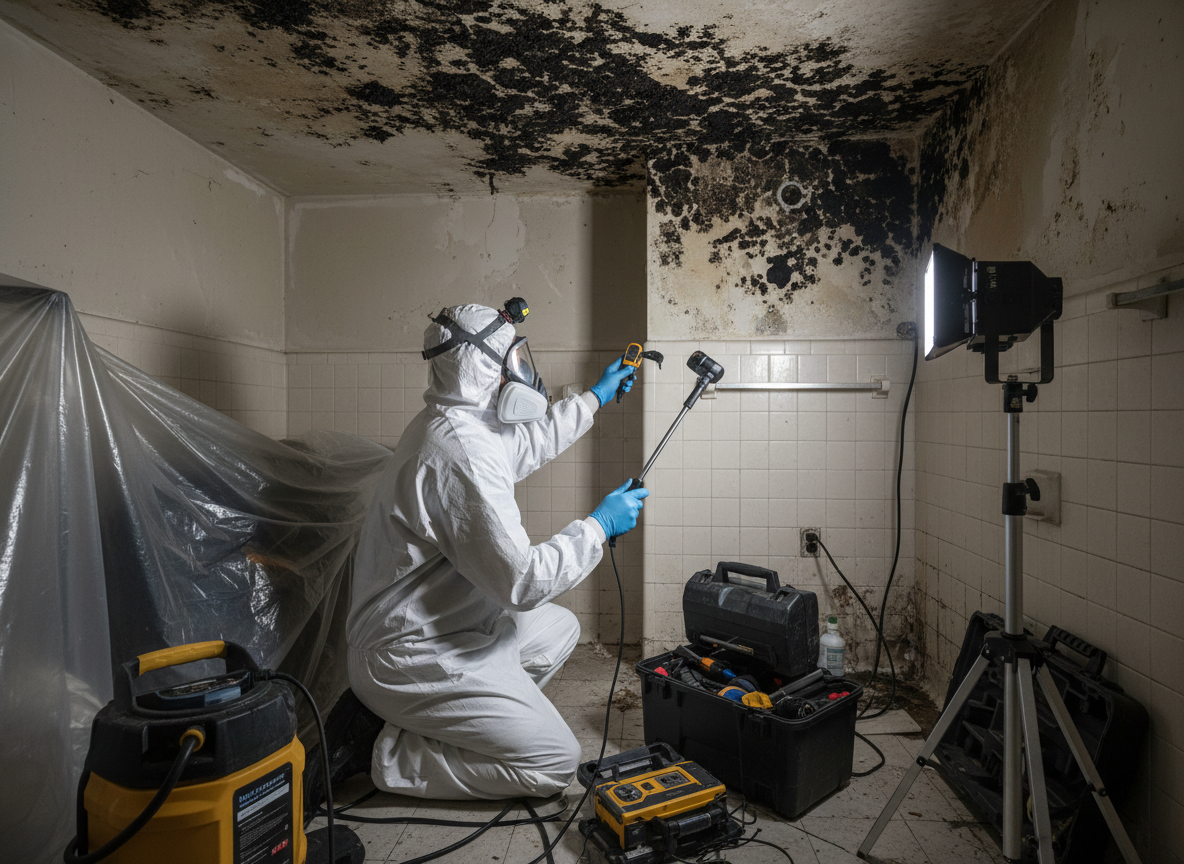
Reseda homes built before the 1980s often feature older plumbing and single-pane windows that create hidden moisture pockets during the hot dry summers typical of the Mediterranean climate here. Black mold inspection focuses on attics, crawl spaces under slab foundations, and areas around HVAC ducts that struggle with condensation when temperatures spike. Technicians check for Aspergillus and Stachybotrys growth behind drywall and in wall cavities where poor ventilation allows spores to settle after rare but intense winter rains.
Lake Balboa properties near Reseda Park frequently show mold along shared walls or in garages due to irrigation runoff and aging sewer lines common in Los Angeles County neighborhoods. Inspection protocols include air sampling, surface swabs, and thermal imaging to locate moisture behind stucco exteriors without unnecessary demolition. Westfield Topanga area commercial spaces add another layer because large flat roofs and shared HVAC systems can spread spores between units if a single leak goes undetected.
Van Nuys and Woodland Hills homes bordering Reseda share similar terrain challenges with shallow slopes that direct water toward foundations during rare storms. Inspectors document every finding with photos and lab results because Los Angeles County health guidelines require clear evidence before any remediation plan begins. Homeowners in these areas learn that black mold often appears first in bathrooms and laundry rooms where constant humidity meets older wood framing.
A full inspection accounts for how the dry summer air masks ongoing leaks until the first autumn rains trigger visible growth. Crews map every affected material type from carpet padding to insulation so residents understand exactly what requires removal versus cleaning.
Technician insight
In Reseda, the thing that catches most people out with black mold inspection is how the dry summer heat hides active leaks behind stucco until the first rains hit older slab homes near Lake Balboa. Homeowners often miss moisture under carpet pads or inside HVAC returns because they assume the arid climate prevents mold, but once we open a wall we find growth that started months earlier from a slow plumbing drip.
Hidden Growth Behind Laundry Wall
A Reseda homeowner noticed a musty smell after a washing machine hose leak. Inspection revealed black mold spreading inside the wall cavity and into the adjacent bathroom. Samples confirmed Stachybotrys, and the report outlined contained removal steps that kept spores from reaching the rest of the single-story home.
How it works
- 1
Initial Assessment
Walk through the property noting visible signs of moisture and past water events in Reseda homes.
- 2
Moisture Mapping
Use meters and infrared cameras to locate hidden damp areas behind walls and under floors.
- 3
Sampling
Collect air and surface samples from targeted zones including attics and crawl spaces.
- 4
Lab Analysis
Send samples for identification of black mold species and concentration levels.
- 5
Report Delivery
Provide written findings with photos, lab results, and next-step recommendations.
Pricing
Cost depends on square footage, number of samples required, and property age.