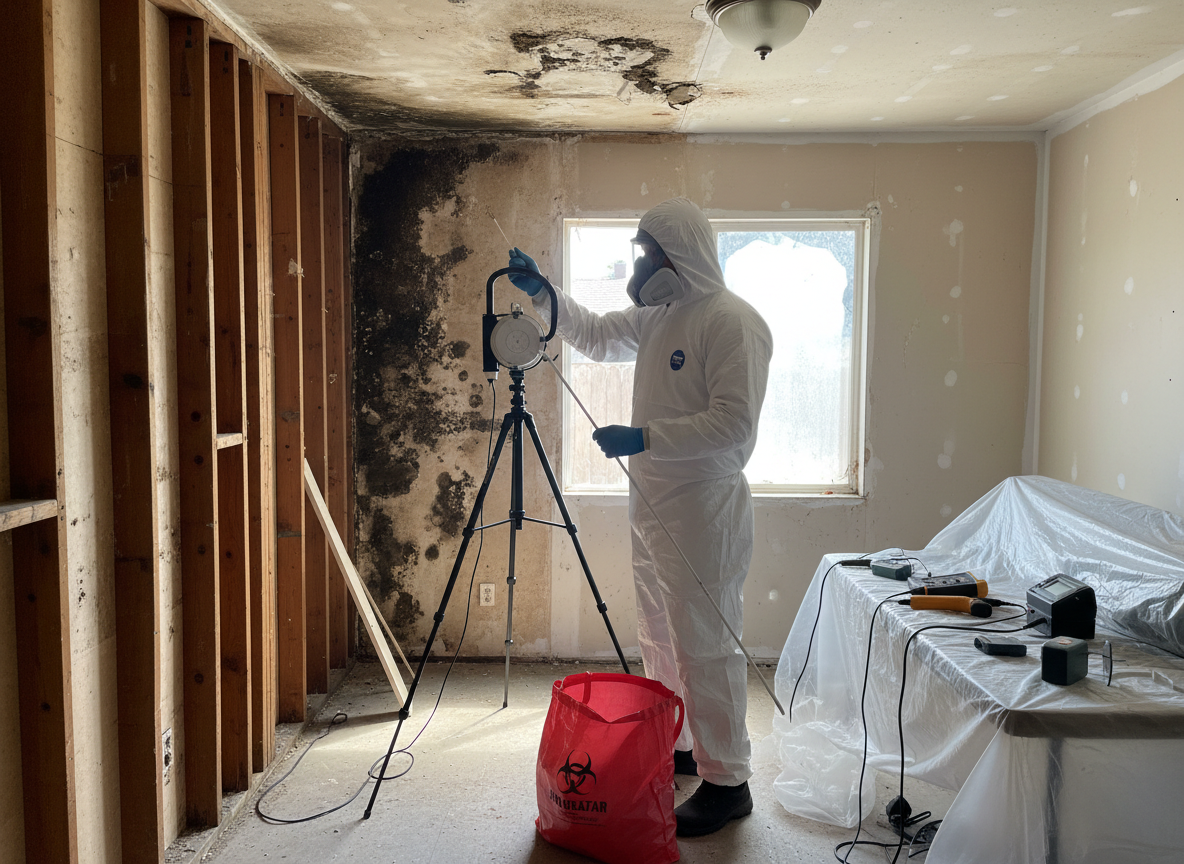
Reseda’s older single-family homes, many built before 1970 with original plumbing and flat roofs, often develop hidden moisture behind stucco or in crawl spaces after rare but intense winter rains. Hot dry summers then drive humidity spikes indoors when residents run evaporative coolers, pushing mold into wall cavities and HVAC ducts near Reseda Park and along Victory Boulevard. Emergency testing requires air sampling combined with moisture mapping and infrared scans to locate growth that visual checks miss, especially in Lake Balboa properties where high water tables keep soil damp year-round.
Testing protocols in Los Angeles County must account for the region’s seismic retrofits and common knob-and-tube wiring that can complicate access. Technicians pull samples from multiple zones, including attics above Westfield Topanga-adjacent streets and under sinks in Van Nuys rentals, then send them for lab analysis within hours. False negatives are common when homeowners have already run fans or opened windows, so protocols include controlled conditions and repeat sampling if initial readings fall near action thresholds.
Edge cases arise in multi-unit buildings along Reseda Boulevard where shared walls allow mold to migrate from one unit to another. Emergency calls frequently involve confirming whether visible staining is active growth or staining from past leaks that dried during summer months. Proper documentation includes chain-of-custody forms and photos tied to specific rooms so remediation crews know exactly which materials require removal versus cleaning.
Technician insight
In Reseda, the thing that catches most people out with emergency mold testing services is assuming hot dry summers eliminate the problem. Older homes near Reseda Park often have roof leaks from the previous winter that stay hidden until the next rain because the dry air masks ongoing moisture behind stucco.
Hidden Growth After Kitchen Leak
A homeowner in Reseda noticed a musty smell two weeks after a dishwasher leak near the sink. Initial visual checks showed nothing. Testing revealed elevated spores in the wall cavity behind the cabinets and under the adjacent flooring. Containment was set up the same day and affected drywall was removed before growth spread into the living area.
How it works
- 1
Initial Assessment
Technician arrives within hours, reviews water intrusion history, and inspects visible areas for staining or musty odors.
- 2
Moisture Mapping
Infrared camera and pin meters locate damp zones behind drywall, under flooring, and in attics without invasive cuts.
- 3
Air and Surface Sampling
Spore traps, tape lifts, and bulk samples are collected from multiple rooms and sent to an accredited lab for same-day results.
- 4
Report and Recommendations
Findings are explained on-site with photos, lab data, and clear next steps for containment or full remediation if needed.
Pricing
Cost depends on square footage, number of samples, and whether crawl space or attic access is required.