Reseda sits in the San Fernando Valley with a Mediterranean climate of hot dry summers that drive homeowners to run evaporative coolers or leave windows open at night. When moisture enters wall cavities or under slab foundations common in 1950s-1970s tract homes near Reseda Park, mold colonies form and produce musty odors that travel through HVAC systems. Odor removal starts only after the moisture source is fixed and the growth is physically removed, because masking agents fail once summer heat reactivates spores.
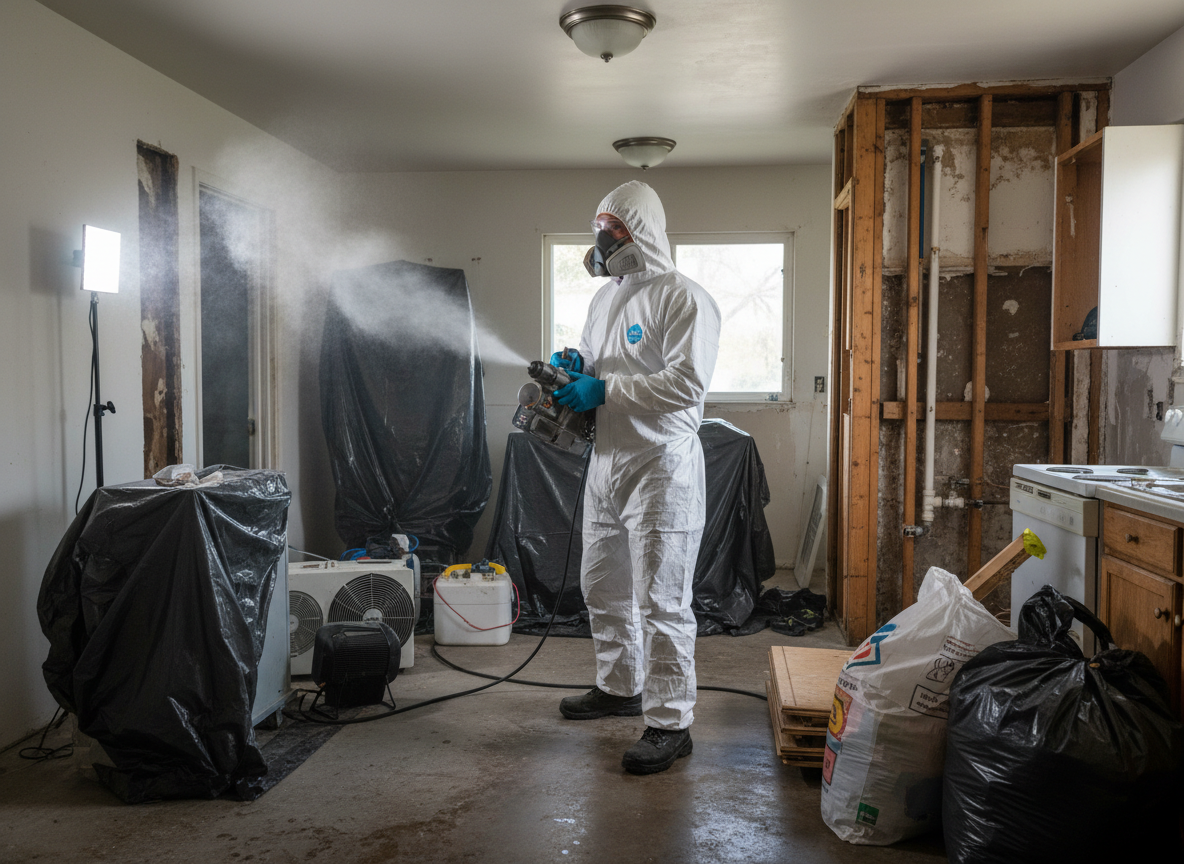
Technicians working from our Victory Boulevard shop reach jobs in Lake Balboa and Van Nuys quickly because traffic patterns along Victory and Tampa allow fast response even at night. We use negative air machines with HEPA filtration to keep particles from migrating into living spaces, then apply EPA-registered antimicrobials only on non-porous surfaces. Porous materials like drywall or carpet padding that have absorbed odor are cut out and bagged on site rather than treated in place.
Los Angeles County building codes require proper disposal of contaminated materials and documentation when odors affect multiple units in attached housing near Westfield Topanga. Homeowners in Woodland Hills often call after noticing smells returning during the first Santa Ana wind event because the dry air pulls residual moisture from soil under crawl spaces. We document every containment step so insurance adjusters see exactly what was removed versus what was cleaned.
Hidden Odor Sources in Reseda Housing
Older stucco homes near Reseda Park frequently have bathroom exhaust fans venting into attics instead of outside, allowing shower humidity to condense on roof sheathing during cooler nights. Slab leaks from aging galvanized lines under kitchens create persistent odors that only surface after the dry season ends. Checking these routes before any treatment prevents repeat calls.
Technician insight
In Reseda, the thing that catches most people out with odor removal mold is older homes where bathroom fans vent into the attic instead of outside. The hot dry summers here pull that trapped moisture down into insulation once the first cool night hits, so the smell returns every fall. Checking the actual vent path before we start saves the second trip.
Lake Balboa Bathroom Odor
A homeowner in Lake Balboa noticed a musty smell in the hallway after running the shower during a heat wave. We traced it to a fan venting into the attic over a 1960s addition. After sealing the vent path, removing saturated insulation, and treating the sheathing, the odor did not return during the next dry spell.
How it works
- 1
Inspection and Moisture Mapping
Use moisture meters and thermal imaging to locate hidden water in walls, attics, and under slabs common in Reseda tract homes.
- 2
Containment Setup
Install plastic barriers and negative air machines to prevent spores from moving into clean areas during removal.
- 3
Source Removal
Cut out and bag affected porous materials, then clean non-porous surfaces with appropriate antimicrobials.
- 4
Odor Neutralization
Apply hydroxyl generators or vapor treatments to break down remaining odor molecules after physical removal.
- 5
Clearance Testing
Perform air sampling and visual inspection to confirm odors are gone before restoring access.
Pricing
Cost depends on square footage affected, accessibility of the growth, and whether HVAC cleaning is required.