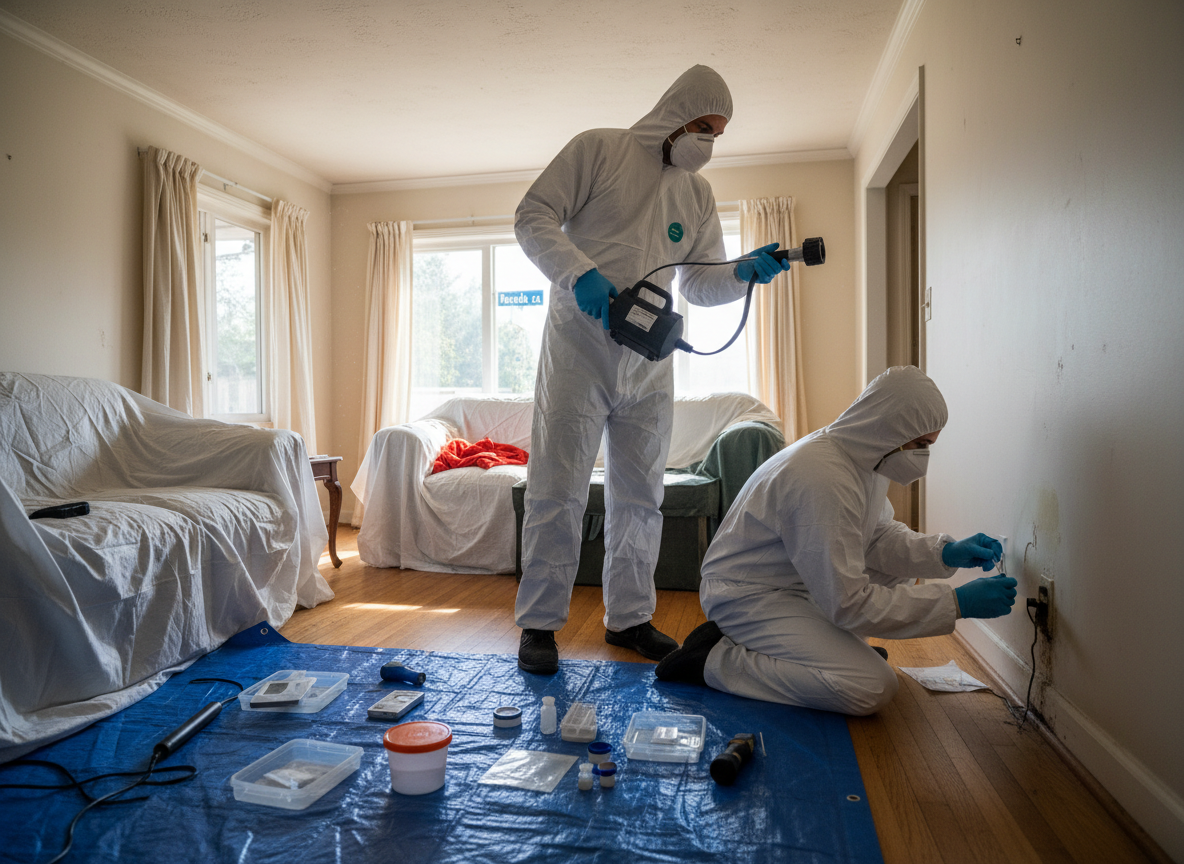
Reseda's 1950s and 1960s stucco homes near Reseda Park and along Victory Boulevard often develop hidden mold when roof leaks or poor attic ventilation meet the area's Mediterranean climate. Hot dry summers mask the problem until winter rains or indoor condensation from air conditioning push moisture into drywall and insulation. Testing must include air samples from living spaces plus surface swabs from behind bathroom tile and under sinks where older plumbing joints fail first.
Los Angeles County building practices from that era used paper-faced drywall and minimal vapor barriers, so mold frequently travels along shared walls in duplexes and triplexes common around Lake Balboa. We pull samples from multiple rooms rather than a single spot because the dry summers let spores stay dormant until humidity spikes. Homeowners who only test visible spots miss growth inside wall cavities that later requires full remediation after a small leak goes unnoticed.
Edge cases include homes backing up to the dry washes near Woodland Hills where flash flooding can push water under slabs. We also check crawl spaces in Van Nuys-adjacent properties where soil moisture migrates upward through unsealed foundations. Testing reports note exact sample locations and spore types so owners can decide whether to address the source before any removal work begins.
DIY kits miss the temperature and humidity readings needed to interpret results correctly in this climate. Professional testing documents conditions at the time of sampling and identifies whether the issue is active or residual from past leaks, which matters for real estate disclosures in Los Angeles County.
Technician insight
In Reseda, the thing that catches most people out with Residential mold testing is how the dry summers let mold stay dormant behind 1950s stucco and lathe walls around Reseda Park until a single winter rain or AC condensate drip reactivates it. Homeowners test only the obvious bathroom and miss the spores traveling through the shared wall cavities common in the older triplexes near Victory Boulevard.
Hidden Growth Behind Reseda Duplex Wall
A homeowner in a 1962 duplex near Lake Balboa noticed a musty smell after heavy winter rain but saw no visible spots. Testing pulled air samples from the living room and a surface swab from the shared wall cavity. Results showed elevated Penicillium behind the drywall. We documented the moisture source at an old roof flashing joint and provided the report so the owner could repair the leak before any removal work.
How it works
- 1
Site Walk-Through
We inspect every room, attic access, and crawl space entry in the Reseda home while noting visible stains, musty odors, and past water events.
- 2
Moisture Mapping
Moisture meters and thermal imaging locate hidden damp areas behind walls and under floors without cutting into finishes.
- 3
Sample Collection
Air samples, tape lifts, and bulk material samples are taken from affected and unaffected zones for lab analysis.
- 4
Report Delivery
A written report lists spore counts, moisture readings, and recommended next steps based on the specific findings in your property.
Pricing
Cost depends on square footage, number of samples required, and whether crawl space or attic access is needed. Upfront quotes given after the initial walk-through.