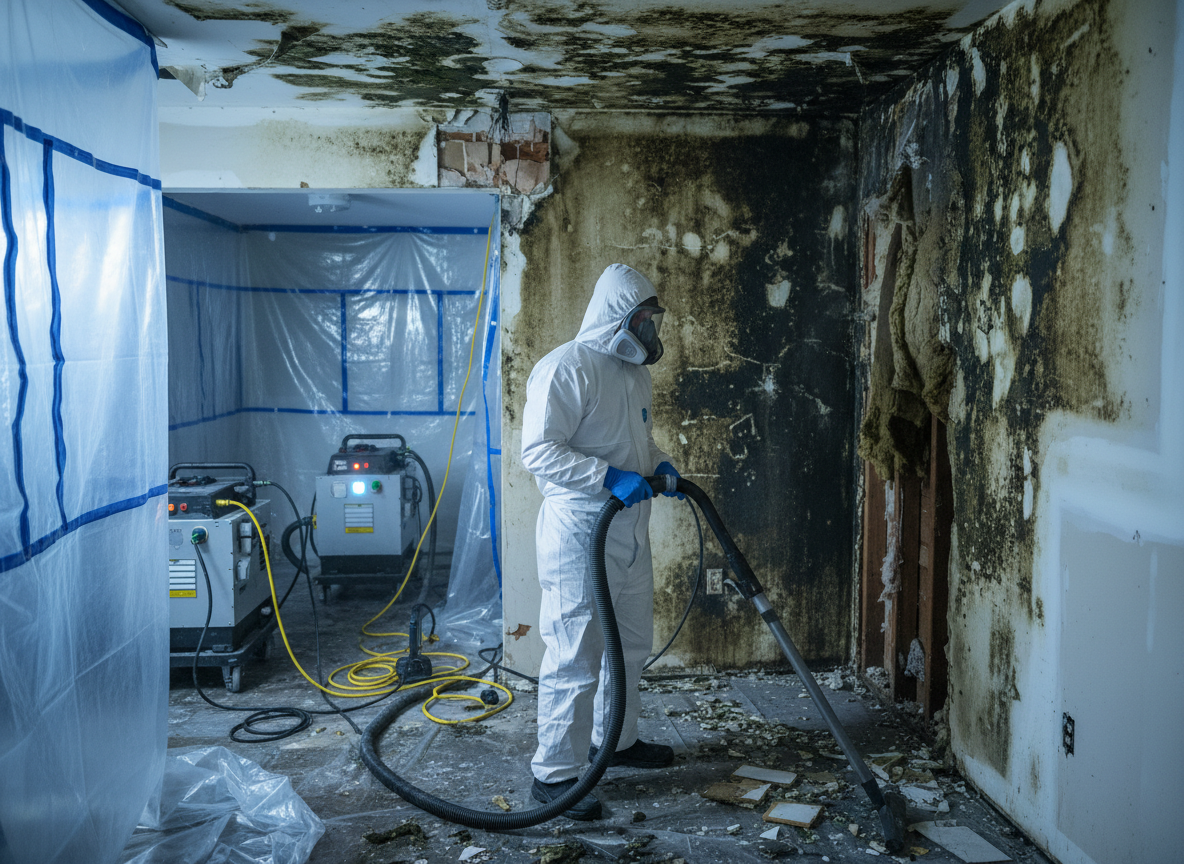
Water intrusion from plumbing leaks or roof issues quickly turns into mold growth in Reseda's older single-family homes, many built in the 1950s and 1960s with stucco exteriors and slab foundations. The area's Mediterranean climate brings hot dry summers that speed surface drying while leaving moisture trapped in wall cavities and under flooring near Reseda Park and along Victory Boulevard corridors. Technicians must pull baseboards, use moisture meters on concrete, and run negative air machines to prevent spores from migrating into living spaces shared with nearby Lake Balboa properties.
Los Angeles County code requires proper containment and HEPA filtration during removal to avoid cross-contamination into HVAC systems common in Reseda tract homes. Dry summers reduce visible water but increase the risk of hidden colonies behind cabinets or in crawl spaces, especially after winter rains that affect Woodland Hills and Van Nuys borders. Work often involves cutting out saturated drywall, treating subfloors with antimicrobial solutions, and documenting moisture levels before clearance testing so homeowners can safely return furniture without re-growth weeks later.
Edge cases include mold behind tile in bathrooms of multi-unit buildings near Westfield Topanga where shared plumbing leaks travel between units. Rapid response prevents structural damage to older joists and avoids insurance denials when documentation shows prompt professional intervention rather than homeowner attempts that spread spores through open windows during Santa Ana wind events.
Technician insight
In Reseda the thing that catches most people out with water damage mold remediation is how the hot dry summers make the surface feel bone-dry within days while moisture stays trapped behind the stucco and under the slab in 1950s homes near Reseda Park, so the job always requires pulling more material than the homeowner expects.
Hidden moisture after bathroom leak
A homeowner in a 1962 Reseda house near Lake Balboa noticed a musty smell weeks after a slow tub leak. Inspection found elevated moisture readings traveling under the slab into the adjacent bedroom wall. Crew removed baseboards and lower drywall on two walls, treated the concrete, and ran drying equipment for four days until meters read dry. Clearance testing allowed the owner to rebuild without further growth during the summer heat.
How it works
- 1
Initial Assessment
Technician arrives within hours, maps all wet materials with meters, and identifies moisture migration paths typical in Reseda slab homes.
- 2
Containment Setup
Plastic barriers and negative air machines isolate the work zone to keep spores from reaching unaffected rooms or neighboring Lake Balboa properties.
- 3
Material Removal
Saturated drywall, insulation, and baseboards are cut out and bagged; antimicrobial treatment applied to exposed framing and concrete.
- 4
Drying and Clearance
Air movers and dehumidifiers run until readings drop below 15 percent; final moisture logs and visual inspection confirm the space is dry before rebuild.
Pricing
Pricing varies by square footage affected, depth of hidden moisture in local stucco and slab construction, and whether contents require separate handling.